

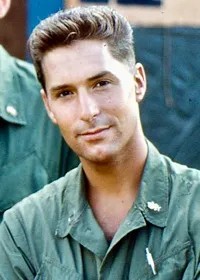
Walking to high school one morning from his family’s farm in Evansville, Indiana, Dr. Jon Schiff (DDS ’64) had a life-defining realization. A capable student who enjoyed building model airplanes and working with his hands, Schiff had worked since age 10—helping on the farm, bussing tables, and running a pre-dawn paper route. His mom had always encouraged him to do more than she had done—to see more than she had seen. That morning, he decided to pursue dentistry.
At age 17, after receiving a partial scholarship to St. Edwards University in Austin, Texas, Schiff studied biology and chemistry, taking prerequisite courses and gaining confidence in his academic abilities.
He entered the IU School of Dentistry (IUSD) when he was only 19. He remembered being inspired by paratrooper patrons from Kentucky’s Fort Campbell during his busboy days, so he also joined the U.S. Navy Reserve. At age 23, he graduated from dental school and was commissioned into the Navy as a lieutenant. Less than a week later, he landed in Okinawa.
There, he treated both civilians and military personnel, seeing patients of all ages with a variety of care needs, similar to private practice. He noted this experience helped him hone his skills beyond the basics learned during dental school. Three years later, he was transferred to Naval Air Station Lemoore. A self-proclaimed “bit of a loner,” he soaked in the California countryside by way of a motorcycle and Jeep he had rebuilt while in Okinawa. Life, aside from a failed marriage, was carefree compared to his next deployment, the 3rd Marine Division in Vietnam.
It was the height of the Vietnam War in December 1967. The U.S. Marines found themselves shorthanded due, in part, to so-called dental casualties—Marines who could no longer fight due to dental pain. Commanders sent for an experienced dentist, and Schiff’s Naval orders were to address dental needs and relieve pain, getting Marines back to the front lines.
His first night in Vietnam was spent questioning his life choices as he attempted to sleep in a “muddy-floored tent” next to an artillery battery firing continual rounds throughout the night. He was sent to Cam Lo, a small Marine artillery base just south of the demilitarized zone (DMZ). Daily, he rode to nearby Con Thien, a strategic Marine Corps combat base.
He traded the traditional white dental coat for a flak jacket (a form of body armor) and a helmet. Dental chairs, modern equipment and standard professional tools were absent from his medical bunker.
“I would line up the Marines with dental problems in a bunker, usually the battalion aid station, and then inject Xylocaine from the front of the line to the end,” Schiff said. “After everyone was numb, I would go back to the beginning of the line and start removing abscessed teeth and treating infections. We used a box of portable instruments, throwaway gauze, and a flashlight or lantern.”
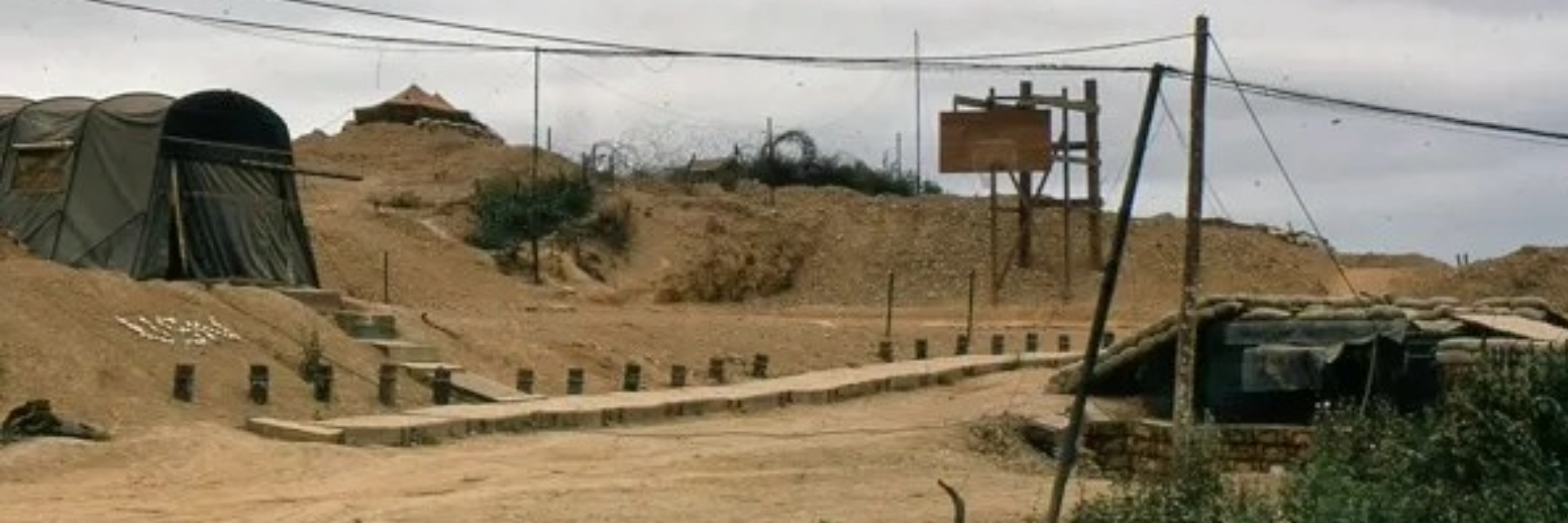
Back at Cam Lo Hill, he converted an old trailer into a makeshift clinic and hooch (military lingo for living quarters) including an air compressor, a 55-gallon rooftop water drum, and a working faucet sent to him by his father. Quickly riddled with shrapnel, the Marine 11th Engineer Battalion constructed a revetment (an earth and sandbagged structure) and rolled the facility in for protection.
Schiff befriended many Marines. He also brought the Hoosier basketball tradition to the hill, persuading the construction battalion to scrape off a flat space for a basketball court near the mess tent. Every evening after chow, they’d play.
It was during a noon-hour basketball game on Sunday, February 4, 1968, that a deafening blast was followed by a singular shout: “Incoming!” A barrage of rounds followed, landing in what Schiff described as a 12–3–6–9 pattern, hitting everything simultaneously. This included the court and the mess tent, where several Marines were eating.
“When I got caught in the first barrage, I remember thinking, this isn’t how I thought I would die,” Schiff recalled.
Then he heard the calls: “Doc! Doc! Help!” He realized these calls were intended for him.
He didn’t want to leave the safety of the slit trench he’d burrowed into during the rapid fire. But the cries kept coming, and those were his friends. This time, instead of saving teeth, Schiff began saving lives.
Discarding his helmet to help him hear, he soon came to the horrifying realization that the wounded were everywhere. He first used his belt as a tourniquet above a Marine’s bleeding femoral artery. Schiff then saw a man with shell fragments in the front of his skull who was reflexively vomiting—and consequently drowning. He shouted to a nearby corpsman for a scalpel and found a ballpoint pen in his pocket. Those tools helped him perform an emergency tracheotomy before more rounds rained down. Schiff automatically shielded the injured Marine with his own body.
Schiff was eventually recognized by the U.S. Marines and the president of the United States with the Bronze Star Medal with a combat “V” device for his acts of heroism that day.
Decades later, reading the citation aloud causes the pitch of Schiff’s voice to rise, then crack as he suppresses tears and emotion. Perhaps those reflect a complicated combination of pride and humility, painful memories of a young farm-boy-turned-dentist who became a reluctant war hero, or even anguish and guilt for saving the soldier’s life.
Notes from a speech Schiff delivered during a military medical conference indicate he kept in touch with the Marine’s mother for several years, but at some point, couldn’t bring himself to call her anymore for updates—they were too difficult to bear. The notes also tell a different story about Schiff—one of a deeply haunted former soldier, forever changed by the terror of war and its aftereffects, something for which he notes no preventive measure or cure exists.
As for dentistry, Schiff went on to care for patients around the world in far better and more traditional dental facilities than those in Vietnam, first through the Navy, then the Air Force Reserve before he retired from the U.S. Army Reserve. He received oral surgery training and added anesthetist to his dental qualifications. He has lived in multiple states, experienced life and dentistry in more countries than he can count or recall, practiced in another dentist’s private practice, and built his own successful Key West, Florida, practice.
The proud father of six and grandfather of 16, Schiff now resides in Florida with his wife, Caryl. He credits his mother for instilling his desire to see the world—something he ultimately fulfilled through a career in dentistry, “either to please her or something I inherited from her,” he added.
He also recognizes something very special about the IU School of Dentistry.
“I’ve seen a lot of dentistry in my lifetime,” he said. “But the best dentistry I saw came from Indiana University School of Dentistry and one other midwestern dental school. In fact, midwestern dentistry was the best I saw anywhere in the world.
Even when I was in Florida, for the patients who were snowbirds, I’d have to replace a lot of their work if they weren’t from the Midwest. It makes me proud to be an IU School of Dentistry alumnus.”
He hopes this message carries through to future dentists considering their careers. “If I were addressing the dental school class of 2027, I would encourage them to join the military. It doesn’t necessarily mean you’ll be shot at. It is a great way to learn about dentistry and a good career.”
Now, at age 85, Schiff can trace it all back to the decision he made on that morning walk so long ago—one that took him far beyond Indiana’s borders. Through every assignment, every country, and every life chapter, dentistry wasn’t just his profession. It was the realization of his dreams—his ticket to experience the world.